Venice Canals Los Angeles – Historic District Walking Guide
Historic Canal District - Los Angeles Hidden Gem with Tranquil Water Views
Welcome to Venice Canal Historic District, widely recognized as the central Venice Canals. Located in the heart of Venice, California, United States, this destination serves as a primary hub for travelers visiting the region.
Discover Venice Canal Historic District
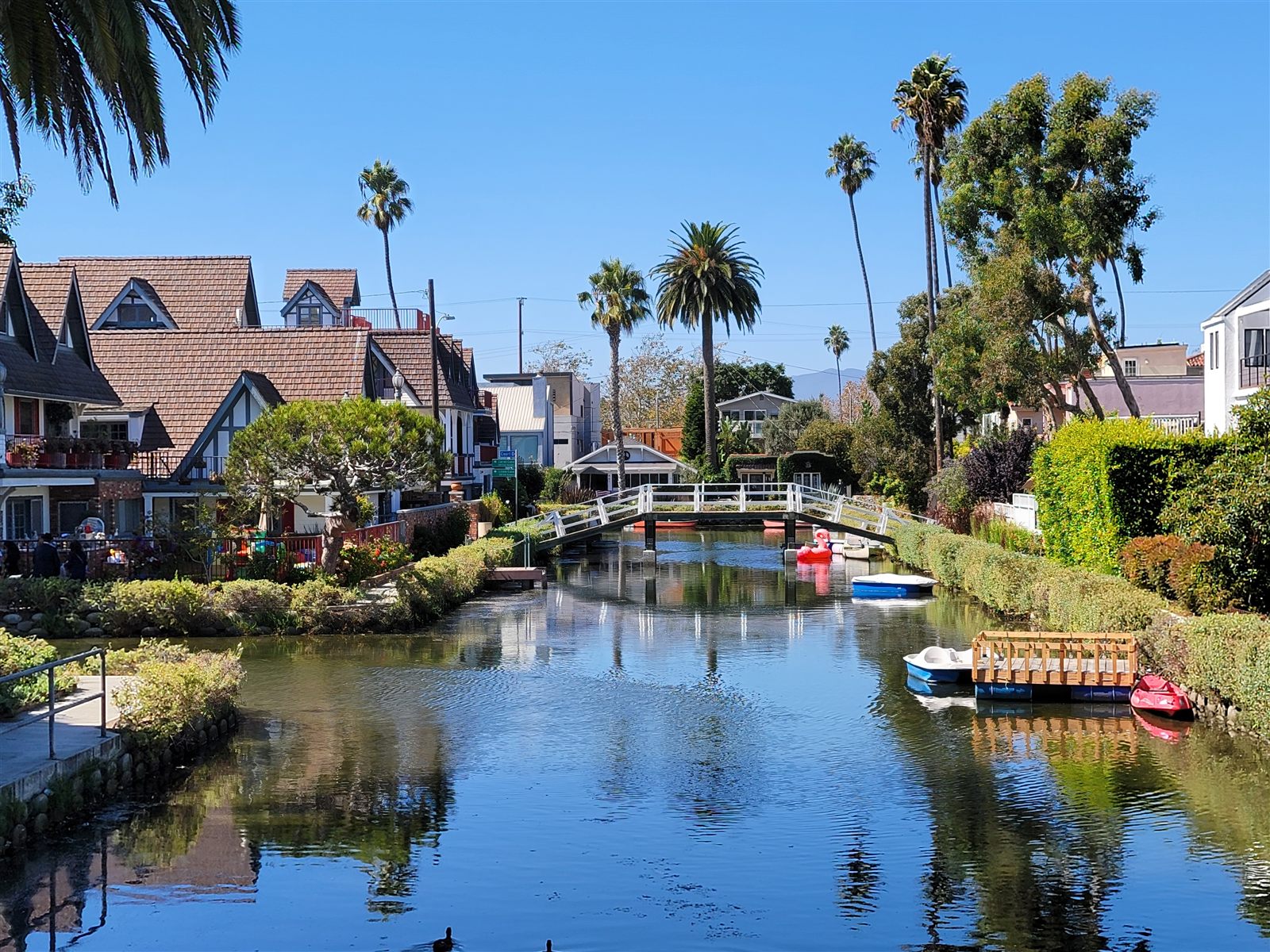
Venice Canal Historic District is a historic canal neighborhood in the Venice area of Los Angeles, California. It was created in 1905 by developer Abbot Kinney, who modeled the waterways on the canals of Venice, Italy, as the centerpiece of his famed 'Venice of America' seaside resort. Six of the original canals survive today - Carroll, Linnie, Howland and Sherman Canals running east to west, crossed by Eastern Canal and Grand Canal running north to south. The lanes between them are lined with a remarkable mix of architecture, from early 20th-century bungalows and Mediterranean Revival houses to bold modern designs. Walking the quiet pedestrian paths and arched footbridges, you can enjoy tranquil water views, abundant water birds, and a living piece of Los Angeles history. It is an ideal destination for photographers and for visitors seeking a peaceful, photogenic corner of the city.
Visit Tips
- The canal district is free to visit, open 24 hours
- Visit early morning or late afternoon for the best photography light
- Bring your camera or phone - the canal district is very photogenic
- Weekends can be crowded - visit on weekdays for a more peaceful experience
District Highlights
- Built by Abbot Kinney in 1905, with rich history
- Unique neighborhood composed of six canals
- Blend of Mediterranean Revival, Victorian, and modern architecture
- Tranquil water views and beautiful bridges, perfect for photography
About Venice Canal Historic District
Basic Information
Official Name
Venice Canal Historic District
Attraction Type
Historic District, LA Must-Visit, California Attraction
Country
United States
City
Venice, Los Angeles, California
Google Rating
4.6/5 (13,030)
Plus Code
XGMJ+8X
Address
Venice, CA 90292
Live Weather & 7-Day Forecast
Local conditions and day-by-day, ready-to-use tips for the Venice canals and nearby Venice Beach - so you know exactly what to wear and whether to pack an umbrella.
Visiting Hours
District Access
Open 24 hours, visit anytime
Best Time to Visit
Morning (7-9 AM): Peaceful, soft light perfect for photography
Evening (5-7 PM): Avoid midday heat, enjoy cool sea breeze
Best Time to Visit
All day: Comfortable temperature, best season to visit
Morning (9-11 AM) or Afternoon (3-5 PM): Warm and comfortable in winter
Check Los Angeles city website for latest information
Admission Information
District Visit
Completely free, no admission fee
Parking Fee
Street parking available, please note parking signs and time limits
Guided Tours
Guided tours are occasionally offered by local historical societies. Please check their websites for current pricing and schedules.
How to Get Here
From Downtown Los Angeles
Drive about 30-40 minutes from downtown LA. Take I-10 W to I-405 S to Venice Blvd exit.
From Los Angeles International Airport (LAX)
About 20 minutes drive from LAX. Take Lincoln Blvd north to Venice Blvd, then head west to the canal district.
From Union Station
Take the Metro E Line from Union Station directly to Downtown Santa Monica, then transfer to a local bus or rideshare to Venice Canals.
Public Transport
Take LA Metro Expo Line to Downtown Santa Monica station, then transfer to bus or bike share to reach the canal district.
Walking or Biking
If you're staying at a hotel near Venice Beach, you can walk or bike to the canal district.
Driving & Parking
There is street parking around the canal district, but pay attention to parking restrictions and time limits. It is recommended to park near Venice Blvd.
About Venice Canal Historic District
Historical Background
District Features
Location
Ecological Environment
The Dream of 'Venice of America'
The Great Fill of 1929
Preservation and Revival
Artists, Film and Everyday Life
Recommended Visit Route
Venice Canal Historic District is perfect for a 1-2 hour leisurely visit. We recommend arriving in the morning or evening, strolling along the pedestrian walkways beside the canals, and enjoying the beautiful architecture and tranquil water views. Plan about 1-2 hours for the entire visit.
Start at the district entrance on Venice Boulevard where Dell Avenue meets it, then step onto the first canal footpath
Follow the path along Carroll Canal, one of the four east-west canals, and enjoy the calm water views
Cross the arched pedestrian bridges and photograph the reflections from different angles
Continue along Linnie, Howland and Sherman Canals to see how each waterway has its own character
Walk down Grand Canal or Eastern Canal, the two north-south waterways that frame the district
Rest on a bench beside the water and take in the quiet neighbourhood atmosphere
Finish by walking the short distance to Venice Beach (about 10 minutes) to continue your day
Visitor Facilities & Practical Information
A neutral, type-level overview of public facilities around the Venice canal district, so you can plan a comfortable visit - no individual businesses are endorsed.
Public Restrooms
Restrooms are not located along the residential canal lanes. The nearest public restrooms are the beachfront facilities along the oceanfront walk and the public plaza near the beach end of Windward Avenue.
Tip: Make a restroom stop before entering the canal lanes.
Parking
On-street parking is limited and time-restricted, and several streets in the surrounding neighbourhoods are residential permit zones. Paid public lots can be found in the beachfront area and along Venice Boulevard.
Tip: Read every sign twice - parking rules change from block to block.
Dining Options
The canal lanes themselves are residential and have no food service. Casual cafes, coffee shops, healthy eateries and takeout stands line the oceanfront walk and Abbot Kinney Boulevard a short walk away.
Tip: Carry a water bottle; public drinking fountains are found mainly along the beachfront.
Grocery & Convenience Stores
Neighbourhood markets, small specialty grocers and convenience stores serve the Venice area along main corridors such as Lincoln Boulevard and Washington Boulevard, a short drive or longer walk from the district.
Tip: Stock up on water and snacks before your visit to stay self-sufficient.
Places to Stay (by Type)
Within easy reach you will find beachfront hotels, smaller boutique guesthouses and vacation rentals in surrounding residential streets, plus a wider range of hotels in nearby Santa Monica and Marina del Rey.
Tip: Accommodation near the coast is popular in summer - book well in advance.
Fuel & EV Charging
Fuel stations are located on the main arterials around Venice, such as Lincoln Boulevard and Centinela Avenue and near Marina del Rey. Public electric-vehicle charging is available at many paid parking lots and shopping areas in the region.
Tip: EV drivers should check charger availability in advance, as demand is high on weekends.
Pharmacy & Medical Help
Pharmacies and urgent-care clinics can be found along the commercial corridors around the district, and full hospital services are a short drive away in Santa Monica.
Tip: Save the address of the nearest urgent-care clinic before your trip.
Accessibility
The canal walkways are pedestrian paths with steps and arched pedestrian bridges, so access for wheelchairs and strollers is limited in places. Flat sidewalk-level routes along adjacent streets and the beach path offer easier alternatives.
Tip: Ask your accommodation for the most accessible route before setting out.
Photo Gallery
Venice Canal Historic District - Los Angeles Historic Canal District
.jpg)
Venice Canal Historic District - canal view 1 in Venice, California
.jpg)
Venice Canal Historic District - canal view 2 in Venice, California
.jpg)
Venice Canal Historic District - canal view 3 in Venice, California
.jpg)
Venice Canal Historic District - canal view 4 in Venice, California
.jpg)
Venice Canal Historic District - canal view 5 in Venice, California
.jpg)
Venice Canal Historic District - canal view 6 in Venice, California
.jpg)
Venice Canal Historic District - canal view 7 in Venice, California
.jpg)
Venice Canal Historic District - canal view 8 in Venice, California
Visitor Reviews
This site does not publish individual visitor reviews. The rating shown above is sourced from Google Maps and reflects the public listing for the Venice Canal Historic District. To read verified visitor reviews, please open the Google Maps link below.
Landmarks & Attractions Around Venice Canals
When visiting Venice Canal Historic District, visitors can easily explore surrounding historical landmarks and points of interest, including Venice Beach Boardwalk and Abbot Kinney Boulevard.
Venice Beach Boardwalk
Iconic oceanside promenade with street performers, shops and Muscle Beach - about a 10 minute walk from the canals.
Abbot Kinney Boulevard
Celebrated 'coolest block in America' shopping and dining street just north of the canal district.
Muscle Beach Venice
Famous outdoor gym and historic landmark on Venice Beach, close to the canal entrance at Pacific Ave.
Marina del Rey
The largest man-made small-craft harbor in the US, a short drive south along the coast.
Santa Monica Pier
Historic pier with an amusement park and aquarium, about 2 miles north along the beach bike path.
Venice Sign & Pacific Avenue
The classic 'Venice' sign and the tree-lined gateway at Venice Blvd and Pacific Ave mark the canal district entrance.
Frequently Asked Questions About Venice Canal Historic District
Quick answers to the questions visitors ask most about the Venice canals.
Where is Venice Canal Historic District located?
Is Venice Canal Historic District free to visit?
How far are the Venice Canals from Venice Beach?
Can you rent boats or kayaks in the Venice canals?
When was Venice Canal Historic District built?
How many canals are there in Venice Canal Historic District?
What is the best time to visit the Venice canals?
Can you swim or boat in the Venice canals?
Where can I park near Venice Canal Historic District?
Is Venice Canal Historic District worth visiting?
Sources & References
For official updates, preservation history and regional tourism information, refer to the authoritative resources below.
United States / California Official Tourism Portal